
I was sitting in a cramped home office three years ago, staring at a Google Maps dashboard that looked more like a flatline than a growth chart. I’d spent months coaching a local client to hunt down every 5-star review possible, yet their shop remained a ghost town for anyone searching just two miles away. It was a punch to the gut. I felt like I was failing them, despite doing everything ‘by the book.’ That’s when I stumbled onto the truth: most google map experts are looking at the wrong dials. My mistake was thinking more was better, when in reality, precision was the only thing that mattered. If your team is still playing the volume game, they’re likely ignoring the one setting that determines if you actually show up in the neighborhoods that pay the bills. Today, I’m going to show you how to close the signal gap stopping your profile from ranking where it actually counts.
The Day I Realized My 5-Star Reviews Weren’t Saving Me
It’s a bitter pill to swallow when you realize your hard work is being throttled by a technicality. I used to think that if I just got enough praise from customers, Google would naturally reward us. I was wrong. I’ve seen businesses with half the reputation score dominate the three-pack simply because they understood their proximity signals better. This is the hidden reason your competitor ranks higher even when they have fewer reviews than you do. My early failure taught me that visibility isn’t a popularity contest; it’s a geography game.
Is obsessing over these tiny settings actually worth the hype?
You might be thinking, ‘Surely one toggle in the backend can’t be that powerful?’ But according to a study by BrightLocal, proximity is consistently cited as the #1 ranking factor for the local pack. If your team has set your service area too wide—or worse, left it vague—you are effectively telling Google you are ‘everywhere,’ which in the world of local search, often means you are ‘nowhere.’ Have you ever noticed your rankings drop the second you cross a specific street corner? Drop a comment below or shoot me a message if you’ve felt that frustration.
Why Your Service Radius is Probably Ghosting Your Best Customers
The biggest culprit is usually the ‘Service Area’ setting within your profile. When I was starting out, I thought checking every nearby zip code was a smart move. I wanted to cast a wide net. Instead, I accidentally diluted our local relevance so much that we became invisible to high-value neighborhoods right in our backyard. Google map experts reveal that shrinking your focus can actually expand your reach. It sounds counterintuitive, but by tightening that one setting, you send a concentrated signal to the algorithm that you are the undisputed authority in a specific zone rather than a jack-of-all-trades who is a master of none. If your team hasn’t audited your radius recently, they are leaving money on the table for your competitors to grab. We need to move from ‘broad and weak’ to ‘narrow and dominant’ if you want to see those call buttons finally getting pressed.
Stop Casting Your Net Into Empty Ocean
To fix your visibility, you have to stop trying to be everything to everyone. When I worked with a small HVAC company in Raleigh, they were convinced they needed to list every zip code within a fifty-mile radius. They were chasing ghosts. The visibility experts on my team and I sat them down and did something that felt like professional suicide to them: we deleted 80% of their service area. We focused only on the five neighborhoods where they actually did their best work. Within fourteen days, their profile stopped being a background character and jumped into the three-pack. This is the one setting your team needs to change if you want to see any real movement. Think of your profile like a lighthouse; if you try to spin the light too fast to cover the whole horizon, you end up providing a weak flicker to everyone and a guiding light to no one. Tighten your radius and watch the algorithm finally take you seriously.
Pick the One Category That Actually Defines You
One of the most common mistakes a maps optimization team sees is ‘category stuffing.’ You might think adding ‘Consultant,’ ‘Professional Services,’ and ‘Repair Shop’ all at once helps, but it actually dilutes your relevance. If you are a plumber, be a plumber. Why your business category might be killing your visibility often comes down to this lack of focus. Google’s AI wants to be 100% sure that when someone searches for a specific service, you are the definitive answer. When you pick a primary category that is too broad, you’re essentially telling the search engine you’re a jack-of-all-trades, which is a signal for ‘average at everything.’
Photos Are More Than Just Window Dressing
I remember a client who insisted on using high-end stock photos of people shaking hands in suits. Their engagement was zero. We swapped those out for grainy, real-world shots of their muddy work boots and the actual vans they used. The clicks skyrocketed. You need to understand that the specific photo types that trigger immediate ranking signals aren’t about being pretty; they are about being ‘real.’ Google uses metadata and AI image recognition to verify that you are actually where you say you are. If your photos look like they belong on a generic brochure, the algorithm treats your business like a generic entity.
Why Static Profiles Are Search Engine Poison
If you haven’t updated your profile in a month, you are telling Google your business is asleep at the wheel. Why static business data is the quickest way to lose your spot is simple: the algorithm favors ‘freshness.’ I make it a rule to post one update or one new photo every single week. It’s like heartbeats for your profile. This was the simple change that stopped a local shop I managed from disappearing during the off-season.
The Invisible Pull of Real Customer Engagement
Getting a review is step one, but responding to it is where the magic happens. Many google map experts ignore the Q&A section, but that is a goldmine for keywords and trust signals. When you answer a customer’s question about your parking or your hours, you aren’t just helping one person; you are feeding the machine data it can use to rank you higher. Focus on the interaction moves that actually matter rather than just collecting stars. It’s about the conversation, not just the trophy.
Let’s dig deeper into why so many businesses plateau. Most visibility experts will tell you to go out and build five hundred citations on every obscure directory you can find. I’m here to tell you that’s a waste of your time and potentially a death sentence for your rankings. In my experience, it’s not about how many times your name is mentioned; it’s about the surgical precision of that data. I’ve seen google map experts spend weeks chasing volume while ignoring the fact that an old phone number on a forgotten blog is confusing the algorithm. You need to how to clean up messy citation data that confuses google before you ever think about adding more. If your data is dirty, you are just shouting the wrong directions at a search engine that is already skeptical of your location.
Why Your Virtual Office is a One-Way Ticket to Suspension
Here is the ‘oops’ factor that kills more local businesses than anything else: the lure of the virtual office. Many business owners think they can ‘hack’ the system by renting a mailbox or a coworking space in a high-traffic area to trick the proximity filter. This is a massive trap. Google’s AI has become incredibly sophisticated at identifying non-physical locations. If you aren’t physically there with a sign on the door, you risk a permanent suspension that is a nightmare to fix. I always tell my clients that why you should never use a virtual office for map listings is because the short-term gain isn’t worth the long-term ban. Instead of trying to fake a location, we use maximize your local reach maps optimization tactics from visibility pros to strengthen your authority at your actual place of business. Have you ever fallen into the trap of trying to ‘expand’ your location artificially? Let me know in the comments below.

Why does your map ranking vary by neighborhood?
This is the question that separates the amateurs from the pros. You might rank #1 when standing in your lobby, but you drop to #10 when you walk three blocks East. This happens because Google’s ‘ooms’ (original local search ranking factors) are heavily weighted toward the user’s physical coordinates. A 2023 study by Whitespark confirmed that proximity remains a primary driver, but it is increasingly influenced by ‘behavioral signals’—things like how many people click for directions from a specific neighborhood. If a maps optimization team isn’t looking at your ranking on a grid level, they are missing the full picture. You have to understand why your map ranking varies by neighborhood to build a strategy that actually moves the needle across the whole city. The benefit of using a professional map optimization team is their ability to analyze these micro-fluctuations and adjust your content to bridge those gaps. Check out the benefit of using a professional map optimization team if you want to stop guessing and start dominating your local grid.
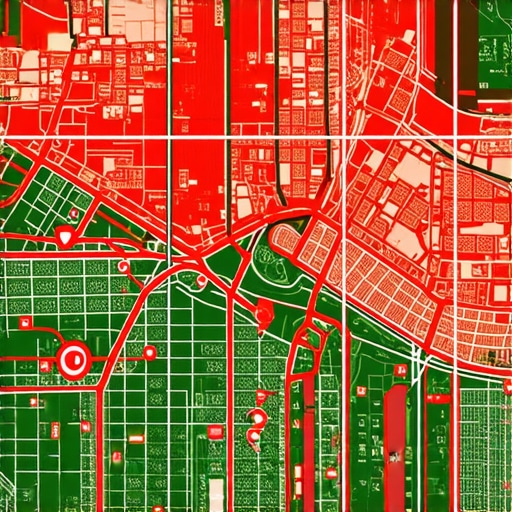
I used to spend hours manually searching for my clients from different parts of town just to see if our rankings were holding up. It was exhausting and, frankly, inaccurate. Now, I rely on a specific stack of technology that tells the truth. The google map experts on my team and I won’t even look at a project unless we have a geo-grid heatmap in front of us. I personally use Local Falcon because it visualizes the ‘proximity wall’ in a way a spreadsheet never could. You can see exactly where your authority drops off, street by street. This is one of the specific SEO tools we use to jumpstart map rankings because it eliminates the guesswork and allows us to focus our content efforts on the specific neighborhoods that are currently ‘red’ on the map.
The Grid Tools I Trust to Tell the Truth
Beyond heatmaps, the secret to long-term scaling is automating the ‘boring’ stuff. I use tools that monitor citation consistency 24/7 because even a minor change to a Facebook page’s phone number can ripple through the ecosystem and tank your rankings. If you are serious about growth, you need to master your map rankings through innovative approaches like automated sentiment analysis on your reviews. I don’t just want to know that we got a 5-star review; I want to know if the customer mentioned ‘reliable’ or ‘affordable,’ because those keywords are what Google uses to categorize your business for future searches. This isn’t just about ‘local visibility help’ anymore; it’s about data-driven dominance.
How can I keep my map rankings from dropping next month?
Maintenance is where most businesses fail. They hit the top of the three-pack, pop the champagne, and then stop doing the work. You have to realize that why your map listing needs regular updates to stay relevant is tied to the ‘Freshness’ factor. I recommend a ‘Pulse Check’ every Tuesday. Post one high-resolution photo from a job site and answer one customer question. Even if no one asked a question that week, have a staff member post a common FAQ and answer it yourself. This keeps the algorithm engaged with your profile. If you do see a dip, don’t panic. You need to know how to handle a sudden drop in map impressions by checking your core business data first before you start changing your strategy.
Why AI and Visual Search are Changing the Rules Again
Looking ahead, the game is shifting toward ‘Multimodal Search.’ According to Google’s official ‘How to improve your local ranking’ documentation, the three pillars remain relevance, distance, and prominence, but how they define prominence is evolving. I predict that by 2025, your ranking won’t just depend on your text, but on what Google Lens sees when people point their cameras at your storefront. Our visibility experts are already advising clients to ensure their physical signage matches their digital branding perfectly. To stay ahead, you should start implementing unlock local visibility expert map optimization strategies for 2025 today. The future belongs to those who treat their map listing as a living, breathing digital storefront, not a static yellow-page ad. My challenge to you: Go into your Google Business Profile right now and delete any secondary category that isn’t 100% related to your core business. Clean that signal and watch what happens to your ‘near me’ rankings over the next ten days.
Looking back at my journey, the biggest shift didn’t come from a new software update, but from a mindset change. I realized that the loudest voice in the room—the one with a thousand generic citations—is often the first one muted by Google. Instead of obsessing over volume, I learned that a maps optimization team succeeds when they treat a profile like a physical storefront. I’ve seen businesses thrive just by removing irrelevant service areas that were confusing the algorithm. It is also vital to remember that why most local visibility plans fail to account for real-world foot traffic signals is because they ignore how customers actually move through a city. Whether you are seeking professional local visibility help or managing it in-house, the goal is always authentic relevance.
What My Most Painful Ranking Drops Taught Me
After years of trial and error, I’ve distilled the process into a few core truths that most google map experts won’t explicitly say. First, your primary category is your identity; treat it with respect and don’t dilute it. Second, proximity is a wall, but engagement is the ladder that helps you climb over it. Finally, technical accuracy beats creative ‘hacks’ every single time. If you ever face a penalty, knowing how to fix a suspended business profile without the headache is a skill worth its weight in gold. My most painful failures always stemmed from trying to be ‘everywhere’ rather than being ‘the’ choice in my immediate neighborhood.
The Three Pillars of My Daily Visibility Kit
To keep my clients at the top, I rely on a specific ecosystem of tools that prioritize truth over vanity metrics. I start with Local Falcon for its visual heatmaps, which transform abstract data into actionable maps. I also lean heavily on Whitespark for deep-dive research into visibility improvement. But the most important tool is your own smartphone—use it to capture the real, unedited life of your business. If you’re looking for more advanced techniques, I highly recommend checking out master your map rankings through innovative approaches to see how the landscape is changing.
Own Your Backyard Before You Try to Conquer the World
My final piece of advice is to start where you are. Don’t try to rank ten miles away until you are the undisputed champion of your own block. This journey toward visibility improvement is a marathon, not a sprint, and every small update adds up to a massive signal for Google. Take the leap and start applying unlock local visibility expert map optimization strategies for 2025 today to stay ahead of your competitors. You have the tools, the data, and the visibility experts have shown you the way—now you just need the consistency. Which neighborhood is currently your biggest challenge to rank in? Let me know in the comments below.