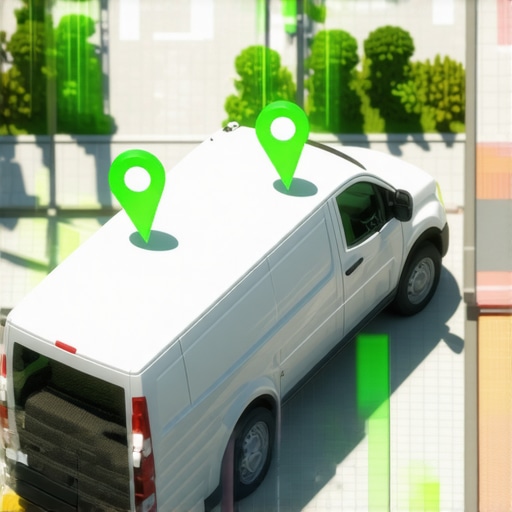
I spent three months and way too much caffeine trying to rank my cousin’s plumbing business in a city twenty miles away from his home office. I did everything the gurus suggested. I tweaked the meta tags until my eyes blurred. I waited. Nothing. Not a single call came in from that high-value zip code. I felt like I was shouting into a void while some guy with a literal closet in that city was taking all the leads. It was a gut-punch realization. Google isn’t just looking for quality; it’s looking for a physical anchor. If you have a service area business (SAB) and no storefront, you are playing the game on ‘hard mode’ by default. Today, I am going to peel back the curtain on why your map pin refuses to budge and how we can actually force Google to update your service area radius to reflect where you actually work.
Stop Chasing Ghosts in Cities You Can’t Reach
For years, I believed the myth that if I just checked the right boxes, my business would show up everywhere I drove my truck. I was wrong. I made the classic mistake of thinking a wider service area in my settings meant more visibility. In reality, proximity is the biggest hurdle for your local rankings, and Google’s algorithm is incredibly stubborn about it. According to data from BrightLocal, 60% of consumers find local business information on Google Maps at least once a week, but they almost always see the businesses closest to them first. It doesn’t matter if you’re the best at what you do; if the algorithm thinks you’re too far away, you’re invisible. Have you ever felt like your business is a ghost in the very neighborhoods you serve?
Is it even possible to outrank a competitor with a real office?
You might be worried that without a brick-and-mortar shop, you’re doomed to second-page obscurity. I’ve been there. Early on, I even tried to use a virtual office address to ‘bridge the gap.’ It was a disaster. Not only did it not work, but it almost cost me the entire listing. You should never use a virtual office for map listings because Google’s verification team is smarter than we give them credit for. The real secret isn’t faking an address; it’s about strengthening the signals that prove you are active in those specific neighborhoods. If you feel like your current local visibility help is actually hurting your rankings, it’s probably because they are using outdated tactics that trigger spam filters. We need to focus on the interaction moves that tell Google you’re the local authority, regardless of where you park your van at night. Let’s look at how we can stop fighting the map and start working with it.To break the proximity barrier, you need to think of your Google Business Profile as a living organism, not a static yellow-pages listing. The most effective way to do this is by mastering the interaction moves that actually matter for dominating map results. Think of these moves like a digital heartbeat; the more consistent and localized the beat, the more Google trusts you are actually ‘there’ in the zip code you claim. When I was working on that plumbing listing for my cousin, I started asking customers to take a photo of the completed job directly from their phones and upload it to our profile. This wasn’t just about showing off a shiny new faucet. It was about the metadata. Google sees the GPS coordinates attached to that upload. Suddenly, the algorithm stopped seeing us as a guy in a home office and started seeing us as a technician active in a high-value neighborhood twenty miles away. This is how the specific signal moves that help small shops claim territory actually function in the wild.
Feed the Algorithm High-Octane Engagement
Interaction isn’t just about getting a review once a month; it’s about the velocity of user actions. If you want to master your map rankings, you have to treat your profile like a social media feed. This means responding to every question, posting weekly updates, and even having your maps optimization team check for community-suggested edits that might be throttling your reach. I once spent three hours manually auditing my cousin’s listing only to find a ‘helpful’ user had suggested his hours were ‘seasonal.’ He was losing calls because Google thought he was closed for the winter! It sounds tedious, but ensuring why your business hours should be accurate on all platforms is the baseline for trust.
Snap Photos Where the Work Really Happens
Most business owners make the mistake of only posting a logo and a picture of their truck. That’s a missed opportunity. You need to understand the exact photo types that trigger your profile ranking signals. This means photos of you in front of local street signs, recognizable neighborhood landmarks, and actual work-in-progress shots. 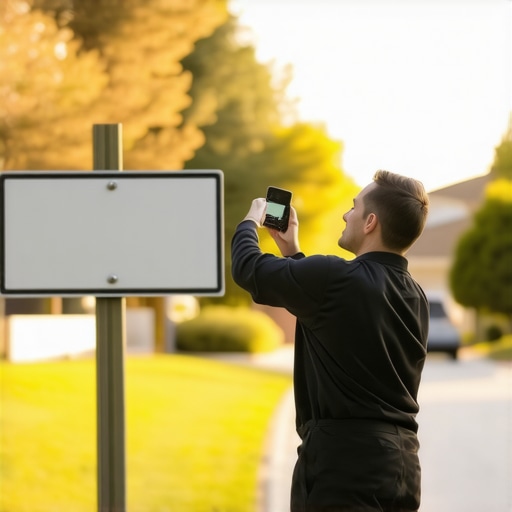 When we started doing this, we bridged the signal gap stopping your profile from ranking in nearby zip codes. Google’s AI vision can actually identify landmarks in your photos, which acts as a secondary verification of your service area. If you’re struggling to see what’s working for others, you can how to snoop on competitor map data to steal their best traffic by looking at which of their photos are getting the most ‘views’ in the back end.
Make Your Reviews Speak the Language of the Neighborhood
A review that says “Great job!” is worthless compared to one that says “Best plumber in North Heights for fixing a leaky water heater.” You need to how to build genuine trust signals that move your map pin by encouraging customers to be specific. There is actually a the specific review word count that triggers ranking boosts, usually around 20 to 30 words with specific keywords. When the plumber started asking for reviews that mentioned the city name and the service performed, his visibility in those ‘ghost town’ zip codes finally began to flare to life. If you aren’t intentional about this, you’ll stay stuck wondering why your shop is invisible to high-value neighborhoods while your competitors take the easy wins.
We have all heard the same advice from every ‘expert’ on the internet: build more citations, list your business in every directory, and wait for the magic to happen. But here is the hard truth that most local visibility help services won’t tell you: citations are becoming a secondary signal at best. In my experience, obsessing over directory counts is like trying to win a race by counting the lug nuts on your wheels while your competitor is already halfway to the finish line. The 2023 Local Search Ranking Factors study by Whitespark confirmed this, showing that ‘Citation Volume’ has plummeted in importance compared to behavioral signals and profile engagement. If you are still paying someone just to sync your NAP (Name, Address, Phone) across 50 obscure websites, you are essentially paying for a digital paperweight.
Citations Are Table Stakes, Not the Winning Hand
Everyone says consistency is the holy grail, but why local citations no longer move the needle like they used to boils down to Google’s increased reliance on real-world user data. Google knows if someone actually clicked your ‘call’ button or if they spent five minutes reading your reviews. This is where a maps optimization team becomes essential. They don’t just ‘list’ you; they engineer an experience that forces engagement. If your profile is just a static page, it’s a graveyard. I’ve seen businesses with 200 citations get crushed by a shop with 20 citations and a massive amount of user-driven interaction moves. Have you ever fallen into this trap of chasing quantity over quality? Let me know in the comments.
Why do ranking results change when you walk across the street?
This is the question that keeps business owners up at night. You can be #1 in the Three-Pack when standing in your lobby, but walk three blocks toward the city center, and you disappear. This happens because of ‘proximity bias.’ To combat this, you need to understand 5 hidden errors in your profile audit that keep you off the three pack. One of the biggest ‘Oops’ factors I see is when an owner gets impatient and starts changing their primary business categories every two weeks to ‘see what works.’ This is a disaster. You need to know why your phone stops ringing when you change your primary category—it essentially resets Google’s trust in your listing, and it can take weeks to recover that momentum.
Another common trap is the temptation of ‘shortcuts.’ I’ve had clients come to me after their profiles were suspended because they thought they could outsmart the system. The truth about buying reviews and why it kills your visibility is that Google’s AI is now incredibly proficient at spotting patterns of unnatural growth. Instead of a boost, you get a shadowban. When you work with real google map experts, they focus on the benefit of using a professional map optimization team who uses white-hat, signal-based strategies that actually stick during algorithm updates. We focus on the nuance of the ‘Signal Gap’—the space between where Google thinks you are and where you actually serve. Closing that gap requires a scalpel, not a sledgehammer.
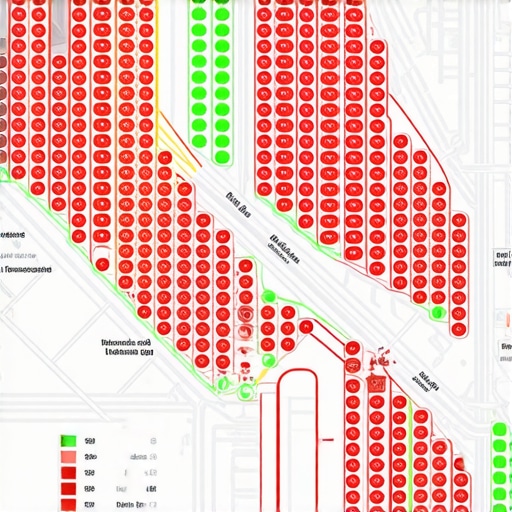
Once you’ve stopped the bleeding with those technical fixes, the next hurdle is staying relevant. I’ve seen countless businesses spend thousands on visibility experts, climb to the top, and then fall off a cliff because they treated their profile like a ‘set it and forget it’ project. To keep my cousin’s plumbing leads flowing, I had to move beyond basic checklists and start using advanced spatial tools. I stopped relying on Google’s own ‘Performance’ tab—which is notoriously vague—and started using grid-based rank trackers like Local Falcon. This allows me to see a 13×13 grid of rankings over a 10-mile radius. If I see a ‘red’ zone in a specific suburb, I know exactly where I need to focus my localized content and photo uploads. If you want to master your map rankings, you have to stop looking at your city as one big circle and start seeing it as a collection of micro-markets.
Stop Guessing and Start Mapping Your True Reach
When you use a grid tracker, you realize that visibility isn’t a static number. You might be #1 on the street where you live but #15 just two miles away. I use these heatmaps to decide where to send my technicians for their next ‘on-site’ photo. By targeting those red zones with GPS-tagged imagery, we are essentially teaching the algorithm that our expertise extends into those specific neighborhoods. This is the only way to the secret to staying on the map when the algorithm shifts unexpectedly. 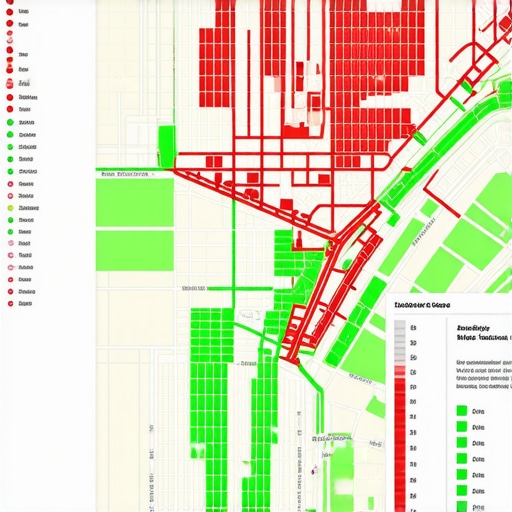
How do I keep these results from disappearing next month?
Maintenance is the difference between a one-hit wonder and a market leader. I recommend a ‘Pulse Check’ every Friday. Spend 15 minutes checking for ‘Suggested Edits’ from competitors—it is a common (and dirty) tactic for rivals to suggest your business is ‘Permanently Closed.’ If you don’t catch it, Google might auto-accept it. Beyond that, you should be checking how to track leads coming directly from your map listing using UTM parameters. This tells you if those calls are coming from the map pin or the ‘Website’ button, which helps you justify your budget for a maps optimization team.
What Your Map Profile Will Look Like in 2026
The future of local search is moving toward ‘AI-Organized Search Results.’ According to the latest Google Business Profile API documentation regarding ‘Merchant Center’ integration, Google is increasingly using your actual product inventory and service menus to answer ‘near me’ queries before the user even finishes typing. This means the ‘Signal Gap’ will only widen for businesses that aren’t hyper-specific. To unlock local visibility expert map optimization strategies for 2025, you need to start treating your service menu like a database, not just a list of chores. If you haven’t yet, go how to snoop on competitor map data to steal their best traffic by looking at their ‘hidden’ secondary categories—it’s often where the real volume lives. My advanced tip for today: go into your ‘Services’ section and write a 300-character description for every single service, including the specific neighborhoods you cover. It’s a tedious hour of work that can double your reach in thirty days.
The Brutal Truth About Being a Digital Ghost
I spent years thinking that simply setting my service area radius to 50 miles would solve my problems. It didn’t. The biggest ‘lightbulb moment’ I ever had was realizing that Google doesn’t care what you say; it cares what you show. If you aren’t physically present in the data, you don’t exist. This is why your business address is scaring away local searchers even if you think it’s hidden. You have to treat every job site as a fresh opportunity to plant a digital flag. I also learned that you can’t just wait for customers to mention your location in reviews; you have to lead them there. Using the review tactic that increases your local map authority by suggesting specific landmarks for them to mention changed everything for my cousin’s plumbing business.
What I Keep in My Map Ranking Toolbox
If you are serious about this, you need more than just the basic dashboard. I personally swear by Local Falcon for seeing exactly where my visibility drops off block-by-block. I also insist on a disciplined schedule for photo uploads—at least three per week from the field. To truly scale, I recommend working with a dedicated maps optimization team who can handle the heavy lifting of signal generation. You should check out these maps optimization tactics from visibility pros to see how the top 1% of service businesses stay ahead. I also rely on deep-dive insights from google map experts reveal top secrets to boost your business presence when the algorithm takes a sudden turn. These resources are my survival kit for the local search jungle.
#IMAGE_PLACEHOLDER_E#
The Neighborhood is Waiting for You
The distance between you and the top of the Three-Pack isn’t measured in miles; it’s measured in signals. You don’t need a massive office building in the center of the city to be the go-to authority. You just need to be more ‘active’ in the eyes of the algorithm than the guy with the fancy storefront. This journey toward visibility improvement is a marathon, not a sprint, but the rewards are life-changing for a small business. If you are ready to take the next step, you can unlock local visibility expert map optimization strategies for 2025 and get ahead of the curve before your competitors wake up. If you’re feeling stuck, don’t hesitate to contact us for a direct audit of your current reach. Your business deserves to be seen in every zip code you serve. Which specific neighborhood are you struggling to show up in right now? Let me know in the comments below!