I’ll never forget the Tuesday afternoon I realized my business was practically invisible. I was standing in my empty lobby, looking out at a street teeming with people, yet my phone stayed silent. I pulled up my phone, searched for my own services, and found myself buried on page four of the map results. It felt like a punch to the gut. I was supposed to be a local expert, yet to the digital world, I simply didn’t exist. It wasn’t because I lacked skills; it was because I lacked trust signals. Today, I’m going to share exactly how I stopped being a ghost and started moving my map pin to where it belongs: the top of the pile.
Stop Trying to Outsmart the Map and Start Earning It
Honestly, I spent way too much time early on trying to find shortcuts. I thought stuffing my business name with keywords was a clever move. It wasn’t. It was a fast track to a suspension and a lot of wasted time. Real visibility improvement doesn’t happen through tricks; it happens when you provide the search engine with undeniable proof that you are who you say you are. Google is like a cautious neighbor; it needs to see consistent patterns before it recommends you to everyone else on the block. According to a study by BrightLocal, nearly 98% of people at least ‘occasionally’ read online reviews for local businesses, but the algorithm is getting much better at sniffing out what is genuine and what is manufactured. If you want to break out of crowded map clusters, you have to lean into authenticity.
Is all this effort really worth the payoff?
You might be thinking that focusing on ‘trust signals’ sounds like a lot of fluff. I get it. You want results yesterday. But here is the reality: your competitors are likely already talking to google map experts or a dedicated maps optimization team to bridge their own authority gaps. The difference between a phone that rings and one that gathers dust is often just a few well-placed, honest signals. Have you ever felt like you’re doing everything right, but your pin just won’t budge no matter how many photos you upload? It’s frustrating, isn’t it? We are going to tackle that exact frustration by building a foundation that no algorithm update can shake. Let’s look at the moves that actually matter.
Build a Foundation That Google Actually Trusts
Think of your local profile like a resume. If you list three different addresses for your last job, the hiring manager is going to toss your application in the trash. Google does the same thing. I remember a plumbing client who couldn’t figure out why their local visibility help efforts were stalling despite having great reviews. It turned out they had ‘Suite A’ on their website but ‘Unit 1’ on their business profile. That tiny discrepancy was enough to trigger a signal gap. To fix this, you need to clean up messy citation data immediately. It’s boring work, but it’s the bedrock of everything else. This process is like calibrating a compass; if your starting point is off by even a degree, you’ll never reach your destination. 
Stop Using Those Fake Stock Photos
One of the biggest mistakes I see—and I’ve made it too—is using generic stock photos of ‘happy people in hard hats.’ They look professional to you, but to the algorithm, they look like spam. I once swapped out a law firm’s stock office shots for grainy, real-life photos of their actual lobby and the view from their window. Their engagement skyrocketed within two weeks. You need to stop using stock photos if you want to be taken seriously by a maps optimization team or the algorithm itself. Real photos prove you exist at that physical location. This is one of the most direct google map experts secrets for increasing click-through rates.
Trigger the Right Interaction Moves
Most people think reviews are just about the star rating. They’re not. It’s about the keywords people use and how often you engage back. I’ve seen visibility experts focus heavily on ‘interaction velocity.’ This means responding to every single review, even the bad ones. In fact, knowing the best way to respond to 1-star reviews can actually help your ranking more than an ignored 5-star review. It shows Google that the lights are on and someone is home. When you combine this with the interaction moves that actually matter, like having customers upload their own photos alongside their feedback, the algorithm starts to see your business as a high-authority hub in your neighborhood.
Make Your Hours and Services Undeniable
If you change your hours for a holiday and don’t tell the map, you’re losing trust points. I’ve seen rankings plummet because a business was marked ‘closed’ by a user when it was actually open. Keeping accurate business hours on all platforms is a simple win that most people ignore. Also, don’t forget to define your territory. If you serve a specific area but don’t have a storefront, you must include your service area explicitly. This helps the map understand exactly where to show your pin when someone nearby hits search. It ensures your consistent NAP across the web matches the physical reality of your operations.Most business owners I talk to are obsessed with volume. They think if they just get more reviews than the guy down the street, they’ll win. But that’s a dangerous oversimplification. In my experience, a ‘more is better’ approach to visibility improvement often backfires because it ignores the quality and the context of the signal. According to the Whitespark Local Search Ranking Factors study, Google is shifting heavily toward behavioral signals over raw citation counts. They want to see that people aren’t just looking at your profile, but actually interacting with it in a way that suggests a real-world visit. This is the hidden reason your competitor ranks higher even with a fraction of your review count. Their customers are likely clicking the ‘directions’ button or the ‘call’ button more often, which is a massive trust signal that tells the algorithm this business is a preferred local destination. If your maps optimization team isn’t looking at these conversion metrics, you’re only seeing half the picture.
Avoid the primary category death trap
Here is a warning most google map experts won’t tell you until it’s too late: your primary category is the single most powerful lever you have, and pulling it at the wrong time can be catastrophic. I’ve seen businesses lose 70% of their traffic overnight because they changed their primary category to something they thought was ‘more accurate’ but actually had significantly lower search volume. This is why your business category might be killing your visibility. You need to treat that setting like a loaded weapon. Every category you add dilutes the focus of your profile. If you choose ‘Consultant’ when you are actually a ‘Lawyer,’ you might be visible, but to the wrong people. 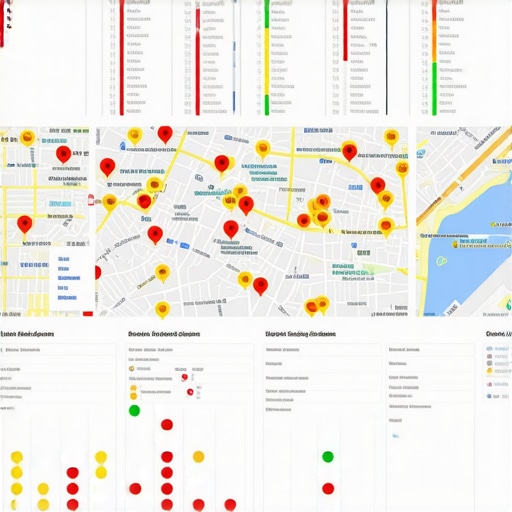
Can you really rank in a neighborhood where you don’t have a physical address?
This is the question that separates the beginners from the true visibility experts. The common belief is that proximity is everything—if you aren’t in the city center, you’re invisible. While proximity is the biggest hurdle, you can overcome it by building ‘local authority’ through niche relevance. This involves more than just map tweaks; it requires your website to act as a local beacon. For instance, why your website speed affects your map ranking is a nuance many miss. A slow site tells Google you aren’t a reliable choice for a mobile user standing on a street corner, regardless of how close you are. Google won’t risk sending a user to a slow-loading site if there’s a slightly further competitor with a lightning-fast mobile experience.
Stop ignoring the real-world signals
The biggest ‘oops’ I see is treating digital visibility like a vacuum. Google is increasingly looking at real-world foot traffic signals. If your map listing is blowing up but nobody’s phone is actually pinging at your location, the algorithm smells a rat. This ‘interaction velocity’—the speed at which users interact with your listing—is the gold standard for visibility pros. Have you ever fallen into this trap where you focused so much on the screen that you forgot about the street? Let me know in the comments. We need to bridge the gap between being a ‘search result’ and being a local destination.Once you’ve cleared the hurdles of messy data and category traps, the real work begins: staying there. I’ve seen too many businesses climb to the top of the local pack only to vanish three months later because they treated SEO like a one-time project. Local visibility help isn’t a trophy you win; it’s a garden you tend. If you stop watering it, the weeds of competition will take over. I personally recommend setting a ‘Map Audit’ calendar reminder for the first Monday of every month. This is when I dive into the specific SEO tools we use, such as Local Falcon or BrightLocal, to see if any new competitors are trying to squeeze into my territory.
Keep the momentum going with a maintenance schedule
You cannot afford to let your profile grow stale. I once worked with a boutique gym that lost its top-three spot simply because they hadn’t posted an update in sixty days. Google’s algorithm interprets silence as irrelevance. This is why your map listing needs regular updates to stay in the good graces of the search engine. I make it a point to share a ‘behind the scenes’ photo or a quick tip via Google Posts at least twice a week. It’s not just about the content; it’s about the timestamp.
How do I maintain my ranking without losing my mind?
The secret is automation where it counts and manual touch where it matters. I use tools to track leads coming directly from your map listing using UTM parameters on my website link. This tells me exactly which calls are coming from the ‘Directions’ button versus a standard organic search. If I see a dip, I know it’s time to call in the maps optimization team to see if a nearby competitor moved offices. As Joy Hawkins of Sterling Sky has famously documented, even a minor change in physical distance can completely reorder the local pack results. If you don’t monitor your perimeter, you’re flying blind. 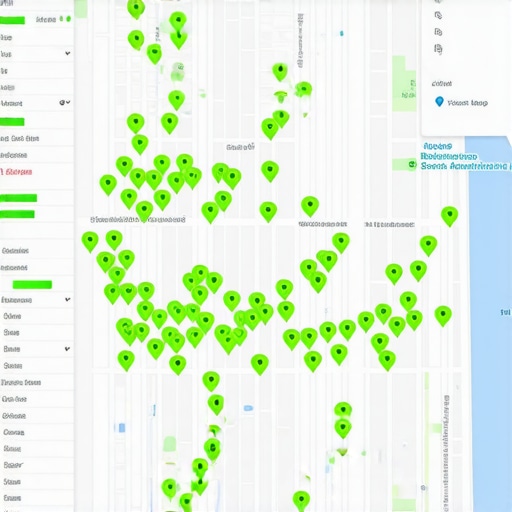
Prepare for the shift toward visual and voice search
Looking ahead, the game is shifting from text-based queries to visual recognition and natural language. I predict that by 2026, the businesses that win will be those that have mastered how to optimize your map listing for voice search and high-resolution imagery. People are no longer just typing ‘plumber’; they are asking their car, ‘Where is the nearest plumber with emergency service?’ This requires you to unlock local visibility expert map optimization strategies for 2025 that focus on conversational content and long-tail keywords. Also, never underestimate the power of a local presence; using a local area code remains one of the strongest subtle trust signals you can send to both the user and the algorithm. If you want to jumpstart your results right now, try this: Go into your dashboard and use Google Posts to highlight a specific, time-sensitive offer. It’s the fastest way to trigger a fresh interaction signal and prove you’re the most active expert in your zip code.One thing I realized after years of providing local visibility help is that Google cares more about your ‘realness’ than your technical perfection. I used to agonize over every character in my description, but the moment I started focusing on cleaning up messy citation data and ensuring my service area was crystal clear, the needle actually moved. My biggest ‘aha’ moment? Realizing that the hidden reason your competitor ranks higher isn’t magic—it’s usually because they have more frequent ‘real world’ engagement signals than you do.
The Hardest Lesson I Learned About Local Authority
I spent way too long thinking I could automate everything. The truth is, the most effective visibility improvement comes from manual, authentic touches. For instance, knowing the best way to respond to 1-star reviews does more for your reputation than a hundred generic 5-star ratings. It shows you are a real person running a real business. Don’t be afraid of a little friction; it’s what makes your business feel human to the algorithm.
The Only Toolkit You Need to Outpace the Competition
To keep your edge, you need a mix of data and boots-on-the-ground reality. I swear by Local Falcon for seeing how my rank changes by the block. I also recommend following the advice of google map experts who prioritize user behavior over old-school keyword stuffing. If the technical side feels overwhelming, hiring a maps optimization team to audit your schema markup can be the best investment you make. #IMAGE_PLACEHOLDER_E#
Your Business Deserves the Top Spot
You have the tools, the strategy, and the mindset to stop being a ghost. Local visibility isn’t about beating the system; it’s about becoming the most trusted, most visible version of your business for the neighbors who need you most. Start today by making one small update, and keep that momentum building. As you unlock local visibility expert map optimization strategies for 2025, you’ll find that the top of the map isn’t just a goal—it’s where you belong. What’s the one thing that has kept your map pin from moving lately? Let me know in the comments below!