
I remember staring at my screen at 2 AM, the blue light stinging my eyes as I typed the exact same thing into the support form for the fourth time. "We are a real business," I pleaded into the void of the help center. The response? A canned email from a bot sent within 12 seconds. It felt like shouting at a brick wall. I’d spent years building my local presence, only to have a line of code decide my shop didn’t exist anymore. If you have ever felt that cold pit in your stomach when the "Suspended" red label appears, you are not alone.
Why the Support Bot is Your Worst Enemy Right Now
The standard appeal process is a trap. Most people follow the instructions on the screen, hit submit, and wait for a miracle. I’m here to tell you that the miracle isn’t coming through that form. When I first started helping neighbors with their visibility improvement, I made the massive mistake of thinking the system was fair. I thought if I provided more photos, the bot would suddenly "see" us. I was wrong. The bot is designed to filter out spam, but it’s often too aggressive, catching legitimate small businesses in its net. According to industry data from Sterling Sky, nearly 20% of service-area businesses encounter profile filters or suspensions that often require manual intervention to fully resolve. Today, we are going to talk about how to stop being a statistic and how to actually break the business profile suspension loop without generic forms.
Is a human ever going to read my appeal?
It is the question I get asked more than any other. The truth is, unless you know how to trigger a manual review, your case might never hit a human desk. My early failure was relying on the "Support" button instead of finding the backdoors that google map experts use to bypass the automated wall.
The Early Mistake That Cost Me Three Months of Leads
When my own side-project profile got flagged, I panicked. I changed the address, updated the phone number, and resubmitted the appeal all in the same hour. This is the equivalent of waving a red flag at a bull. The system saw the rapid changes as even more suspicious activity. I learned the hard way that verifying your business profile without the support loop requires patience and a specific sequence of actions that don’t trigger the spam algorithm. Have you ever felt like your business was being "ghosted" by the very platform that is supposed to help you find customers? It is a frustrating, lonely place to be, but there is a way out that doesn’t involve waiting six weeks for a "No" from a machine. We need to focus on the optimization moves that save you from suspensions before you even hit that submit button.
Scrub Your Profile for Red Flags First
Before you even think about appealing, you have to clean house. Think of your business profile like a passport; if there is a single smudge or a typo on your birthdate, you aren’t getting through customs. I once worked with a local locksmith who was tearing his hair out because his profile was suspended for months. He had hired a cheap team that claimed to offer visibility improvement, but all they did was stuff his business name with keywords like "Best Reliable Fast Locksmith." That is a death sentence. The first thing we did was revert his name to exactly what was on his business license.
The Citation Audit That Actually Works
Your digital footprint must be a mirror image of your profile. If your Yelp page says "Suite 101" but your profile says "Unit A," the algorithm smells a rat. You need to perform the citation audit moves that actually fix messy map data before you ask for a human to look at your case. If the data is messy, a human will just hit the "Reject" button in three seconds because you haven’t done your homework.
Gather Your Paperwork Like a Private Investigator
When you finally get a human to look at your appeal, they aren’t looking for your marketing pitch. They want cold, hard proof that you exist where you say you do. I tell my clients to treat this like a court case. You need a utility bill, a business license, and a photo of your branded vehicle or storefront. Most people fail because they send a blurry photo of a business card. That doesn’t prove anything. 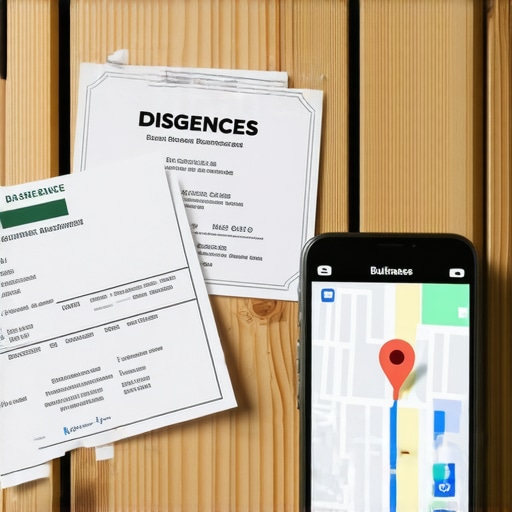
Why Photos Are Your Secret Weapon
It isn’t just about the document itself; it is about the metadata. When google map experts submit an appeal, they often include a video walk-through of the office or shop. I remember a specific case with a service-area plumber where we recorded a 30-second clip of him unlocking his van, showing the tools, and pointing to the vinyl wrap on the side of the truck. That video did more for his case than ten emails ever could. It provides the optimization move that saves you from suspensions by proving physical reality to a digital auditor.
How to Skip the Bot and Find the Human Reviewer
The biggest secret in the industry is that the standard "Appeal" button is often a dead end. To get real local visibility help, you sometimes have to use the "Contact Us" flow under the "Fix a Problem" menu rather than the direct suspension notification. This often routes you to a different support queue. When you get the chance to describe your issue, don’t complain about lost revenue. Instead, use a specific phrase: "I have verified my physical location and cross-referenced all third-party citations for accuracy." This tells the support staff that you are an expert and not just another frustrated business owner.
The Specific Sequence for Rapid Reinstatement
There is a rhythm to this. If you submit an appeal and then change your phone number the next day, you reset the clock and look suspicious. You must follow the exact steps we use for rapid visibility improvement: Audit, Fix, Document, and only then, Appeal. I’ve seen how map experts find and fix hidden profile verification errors by simply looking at the secondary categories that were fighting each other behind the scenes. Sometimes, the fix isn’t even in your address; it is in a conflicting service category you forgot you added three years ago. You have to be willing to look at the boring technicalities if you want the high-traffic rewards.Let’s dig deeper into the mechanics that separate a thriving profile from one that is just taking up space. Most business owners are obsessed with review volume, thinking that the shop with 500 reviews will always beat the one with 50. In my experience, that is a dangerous oversimplification. I have seen profiles with half the review count of their rivals sit comfortably at the top of the local three-pack because they mastered interaction signals.
The Interaction Myth That Keeps You from the Top Spot
If your profile gets a thousand views but zero clicks for directions or phone calls, the algorithm starts to wonder if you are actually relevant to the searcher’s intent. According to the Moz Local Search Ranking Factors survey, behavioral signals—like mobile clicks-to-call and the frequency of direction requests—have become a dominant force in local rankings. This is precisely why visibility experts focus on interaction rather than reviews alone. It is about proving to the system that people do not just see you; they want to find you. If you are struggling with low conversion despite high impressions, you might be looking for the visibility improvement move for stagnant local businesses that shifts the focus toward real user engagement and mobile-first design.
The Dangerous Trap of Photo Obsession
Here is a common “oops” factor I see all the time: a business owner gets excited and uploads fifty new photos in a single afternoon, or worse, deletes their old ones to “start fresh.” This is a massive mistake. The algorithm likes consistency and history. When you delete old data, you often delete the very signals that established your longevity. Furthermore, why your local search authority drops when you change photos too frequently is often due to the system re-evaluating your profile’s stability. I once worked with a local landscaper who lost his top spot for three weeks just because he swapped his storefront photo for a low-resolution logo. It took nearly a month of manual work to get back to where he was. 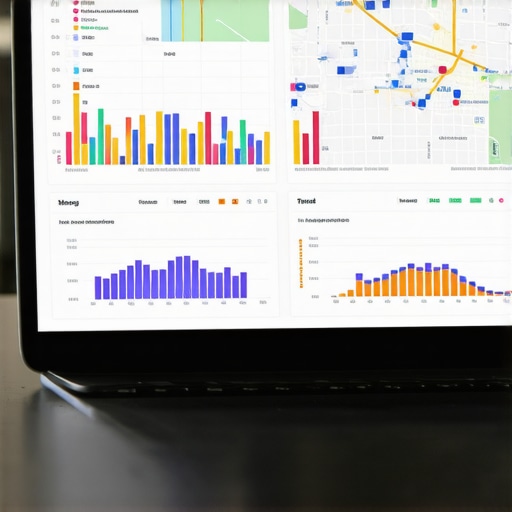
Are Your Categories Secretly Fighting Each Other?
This is a sophisticated error that even some mid-tier agencies miss. If you select primary and secondary categories that overlap too much or conflict with your service area, you can trigger a proximity filter that hides you from view. I’ve seen why your business categories might be fighting each other first-hand; for example, a general “Contractor” category can actually dilute the power of a specific “Kitchen Remodeler” tag in certain high-competition zones. To fix this, you need a google map experts level audit of how your services align with local search intent.
Don’t Fall for the Instant Ranking Promise
If a team promises to get you to #1 overnight by building five hundred directory links, run the other way. This is one of the 5 signs your local visibility help is actually hurting your rankings. Real growth in 2025 is slow, steady, and based on verified data. You have to know how to spot a fake map optimization team before you hire them, or you will end up right back in the suspension loop we talked about earlier. Many local visibility help tactics that no longer work involve these automated bulk actions that today’s AI-driven filters catch instantly. Have you ever fallen into this trap of over-optimizing and seeing your rankings drop? Let me know in the comments.Transitioning from fixing a crisis to maintaining a lead is where most business owners fail. Once the red ‘Suspended’ label is gone, the temptation is to sit back and relax. But the map is a living, breathing ecosystem. I personally use geo-grid tracking software like Local Falcon or BrightLocal to see exactly how my clients rank street-by-street. If you are only checking your rank from your office computer, you are flying blind because your position changes every few blocks. This is why your business map presence is flatlining despite great content; you are likely winning at your front door but losing three miles away. Using these heatmaps allows a maps optimization team to identify ‘dead zones’ where a competitor is siphoning off your leads.
How do I keep my map rankings alive over time?
Consistency is the only currency that matters to the algorithm. I recommend a ‘First Monday’ routine where you audit your secondary categories and check for any suggested edits from the public. Sometimes, a competitor will suggest your business is ‘Permanently Closed’ just to see if you are paying attention. If you aren’t, that edit could go live and kill your traffic overnight. As Mike Blumenthal, a leading authority in local search, often emphasizes, the ‘Near Me’ intent is becoming hyper-localized, meaning even small changes in your listing activity can shift your radius significantly. 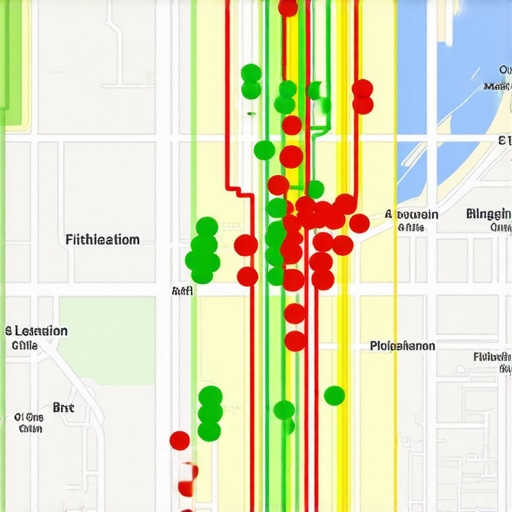 To stay ahead, you need to unlock local visibility expert map optimization strategies for 2025 that focus on real-time data over static keywords. I predict that within the next year, Google will lean even harder into AI-generated summaries of your reviews to determine your rank. This means that what people say in their reviews will be ten times more important than the star rating itself. If your reviews mention ‘fast response’ or ‘fair pricing’ frequently, you’ll start winning those specific searches automatically. This is the secret to staying on the map when the algorithm shifts. You have to feed the machine the specific data points it wants to see before it even asks for them. If you feel your momentum slowing down, it is likely because you have stopped feeding the beast new interaction signals. I’ve seen why map listing optimization requires constant updates firsthand; a profile that hasn’t posted a photo or answered a Q&A in three months is a profile that is begging to be outranked. My advanced tip for you today is this: Go into your profile right now and check your secondary categories. If you haven’t looked at them in six months, there is a high probability you are missing out on a niche tag that could double your impressions. Try making the simple change to your secondary categories for faster growth and watch your geo-grid heatmap turn green over the next 48 hours.
The One Mistake That Still Keeps Me Up at Night
I used to think that more data was always better. I’d flood the system with every possible detail, thinking I was being helpful to the bots. I learned the hard way that the algorithm prizes clarity over volume. If you provide three different phone numbers across various directories, you aren’t being thorough; you are being confusing. The biggest lightbulb moment for me was realizing that the secret to staying on the map when the algorithm shifts isn’t about chasing the latest trick—it’s about having the most consistent story across the entire web. Sometimes, the best visibility improvement strategy is to simplify your footprint until there is zero room for doubt about who you are. Remember, if a human reviewer can’t verify your data in thirty seconds, they won’t spend a thirty-first second trying to help you.
The Essential Toolkit for Reclaiming Your Territory
You don’t need a hundred different subscriptions, but you do need a few high-quality sources of truth. For street-by-street analysis, I swear by geo-grid trackers like Local Falcon; they show you the granular reality of your reach that your standard dashboard often hides. I also highly recommend the Sterling Sky blog for the most rigorous case studies on why profiles get flagged. If you find yourself drowning in technical errors, connecting with a maps optimization team can save you months of trial and error. These resources aren’t just about raw data; they are about giving you the confidence to make moves that actually stick without triggering the spam filters. #IMAGE_PLACEHOLDER_E#
Your Digital Storefront is Worth the Fight
Getting your business back on the map—and keeping it there—is one of the most rewarding challenges a local owner can face in 2025. It’s more than just a digital pin; it’s the lifeline that connects your hard work to the people in your community who need you most. Don’t let a temporary suspension or a frustrating dip in rankings discourage you from seeking the local visibility help you need to thrive. Your business has a physical place in your neighborhood, and with persistence and the right data-backed strategy, the algorithm will eventually recognize that reality. Have you ever felt like your business was being ghosted by the map despite having a great reputation? Let me know your experience in the comments below.