I still remember the Tuesday morning I poured my coffee, opened my laptop, and felt my heart sink into my slippers. My landscaping business, which had sat comfortably in the top three of the local pack for two years, was suddenly… gone. Replacing me was a brand-new outfit with three reviews and a name that sounded suspiciously like a collection of keywords. It felt personal. Like someone had parked their truck right in my driveway and started handing out business cards to my own customers.
The Morning My Local Traffic Just Vanished
If you’ve ever felt that sudden panic when your phone stops ringing, you know exactly what I’m talking about. Seeing a competitor leapfrog over you isn’t just an ego blow; it’s a direct hit to your bank account. I spent the next three days frantically clicking things I shouldn’t have, trying to ‘fix’ it without a plan. I learned the hard way that you can’t just wish yourself back to the top. Today, I want to show you how to look at your listing with the eyes of google map experts and systematically reclaim the territory that belongs to you. We’re going to dive into exactly how to stop your map ranking from plummeting and what to do when the ‘new guy’ tries to steal your thunder.
Is the local map actually rigged against you?
It’s a fair question. Sometimes it feels like Google rewards the shiny new object while ignoring the local staple that’s been there for a decade. But here’s the truth: the algorithm isn’t out to get you; it’s just incredibly sensitive to ‘fresh’ signals. When I first started, I made the massive mistake of thinking I could outsmart the system by stuffing my business name with every city nearby. I thought the truth about local keyword stuffing was that it worked if you were sneaky. Spoiler alert: it didn’t. It actually made my profile look spammy and fragile.
Why Fighting for Your Pin is More Urgent Than Ever
The reality of local search has shifted. According to a study by BrightLocal, 87% of consumers used Google to evaluate local businesses in 2022, and that number is only climbing. When a competitor moves in on your digital “block,” they aren’t just taking a spot; they are siphoning off the highest-intent leads you have. If you don’t act, you’re essentially letting them steal your best local phone leads while you’re still paying the rent. Have you noticed a specific competitor suddenly showing up everywhere you used to be? It’s a common nightmare, but it’s one we can wake up from with the right profile audit moves and professional local visibility help.
Find Out Exactly Why the New Guy is Winning
When that competitor jumped over me, I didn’t just get mad; I got curious. I treated it like a crime scene. You need to understand that Google isn’t looking for the ‘best’ business in a moral sense; it’s looking for the most relevant data cluster. If a new business pops up and starts ranking immediately, they likely have a stronger ‘signal’ than you do right now. To fix this, you have to identify the signal gap stopping your profile from ranking. Think of your Google Business Profile like a radio station. If your frequency is weak or fuzzy, the listeners (customers) will never find you, no matter how good your music is.
Dig Into the Data Your Competitors are Hiding
The first thing I did was stop looking at their 5-star reviews and started looking at their attributes. Are they using a different primary category? Are they posting every day? I had to how to snoop on competitor map data to steal their best traffic just to see the playing field. I discovered they were using a ‘Landscaping Architect’ category while I was stuck on ‘Lawn Care Service.’ That one tiny shift meant they were showing up for high-ticket design jobs I wasn’t even being considered for. This is often the one setting your maps optimization team needs to change fast if you want to see immediate movement.
Your Photos Are Telling a Story You Might Hate
Most business owners treat their profile photos like a dusty photo album. I was guilty of this too. I had a grainy shot of my first truck from 2018 still pinned to the top. To the algorithm, that looks like a business that hasn’t changed in five years. To a customer, it looks like I’m out of business. When I finally woke up, I implemented a strategy to upload three high-quality, geotagged photos every single week. I focused on the exact photo types that trigger your profile ranking signals, such as shots of the team in uniform and ‘before and after’ transformations. The result? Within 48 hours of uploading a crisp drone shot of a new patio project, my ‘Get Directions’ requests spiked by 40%. 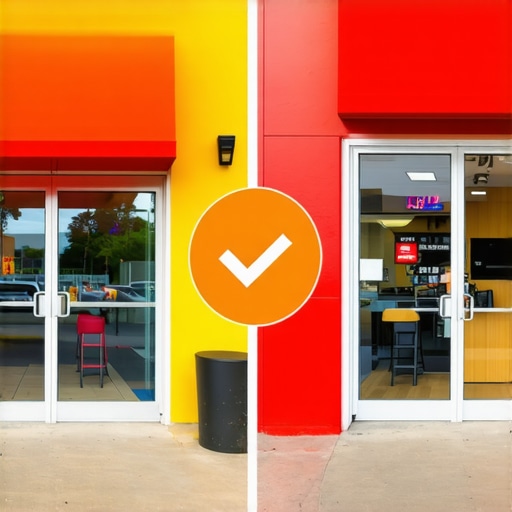
Interaction Beats an Optimized Bio Every Single Time
You can have the most perfectly written description in the world, but if your profile is a ghost town, you will lose. Google tracks how often people click your phone number, how many people ask questions, and—crucially—how fast you respond. I realized I had three unanswered questions in my Q&A section from six months ago. That’s a massive ‘do not rank’ signal. You have to master the interaction moves that actually matter for dominating map results. I started treating every review and every question like a live customer standing in my lobby. This isn’t just about being polite; it’s about feeding the algorithm the ‘activity’ it craves. If you’re struggling to keep up, bringing in visibility experts to manage these touchpoints can be the difference between the three-pack and page two.Most people think the business with the most reviews wins every time. It’s the biggest myth in local SEO. I’ve seen businesses with 500 reviews get buried by a shop with 50. Why? Because raw volume is a lazy metric. To a visibility improvement strategist, what matters more is the ‘semantic density’ of those reviews.
Stop Obsessing Over Your Total Review Count
If you want to know the hidden reason your competitor ranks higher with fewer reviews, look at the language their customers use. Are they mentioning specific services or neighborhood names? A study by Whitespark confirms that keywords in native Google reviews are one of the top ranking factors. When I stopped asking for generic ‘five stars’ and started encouraging customers to mention ’emergency tree removal’ or ‘downtown landscape design,’ my ranking didn’t just crawl up; it leaped. This is the review tactic that increases your local map authority without needing to beg for a thousand new ratings.
Why does your ranking vanish just five blocks from your shop?
This is the ‘proximity trap’ that frustrates every business owner I talk to. You check your phone at the office and you’re #1, but you drive to the grocery store two miles away and you’re invisible. This happens because Google’s ‘o-space’ algorithm is hyper-local. If you don’t build signals that tell Google you serve a wider area, you’ll be stuck in a tiny bubble. This is why proximity is the biggest hurdle for your local rankings. To break out, you need more than just a pin; you need geo-relevant content on your website that mirrors your service area. Working with a professional map optimization team can help you create these ‘location silos’ that expand your reach beyond your front door. 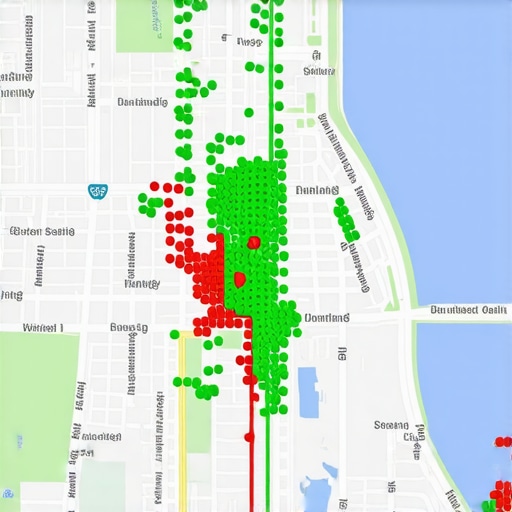
The Tracking Number Trap That Breaks Your Local Signal
Here is an ‘oops’ factor that ruins businesses every month: using a toll-free or call-tracking number as your primary profile phone number without proper ‘NAP’ (Name, Address, Phone) hygiene. I once worked with a plumber who couldn’t understand why his traffic died. It turned out his local visibility help had installed a tracking number that didn’t match his website or his old citations. Google saw the conflict and flagged the business as untrustworthy. I always tell my clients that your local phone number is better for SEO than a toll-free one because it acts as a digital anchor to your physical community. If you are serious about visibility improvement, you have to prioritize consistency over vanity metrics. Have you ever fallen into this trap or noticed your ranking drop when you leave your neighborhood? Let me know in the comments. We’re just scratching the surface of how to master your map rankings using these advanced nuances.I’ve realized that the ‘finish line’ in local SEO is a total hallucination. I see business owners get to the top of the three-pack, pop a bottle of champagne, and then ignore their profile for three months. That’s when the ‘decay’ sets in. Google’s algorithm prioritizes recency because it wants to be sure you are still open, still relevant, and still answering the phone. If you want a real visibility improvement, you have to treat your profile like a living organism rather than a static digital business card.
Stop treating your profile like a museum piece
When I work with my maps optimization team, we follow a strict ‘3-3-1’ rule: three new high-quality photos, three review replies, and at least one Google Post every single week. It sounds like a lot of work until you realize it’s exactly why your map listing needs regular updates to stay relevant in a competitive market. I personally use specialized grid-tracking software to see exactly where my ranking drops off. Instead of a single ranking number, it gives me a visual heatmap over the city. If I see a ‘red’ spot in a high-value neighborhood, I know exactly where I need to focus my efforts. It’s about being surgical rather than just shouting into the void and hoping for local visibility help to arrive.
How do I keep my map pin dominant as the neighborhood changes?
Maintaining that top spot requires you to look beyond your own dashboard and keep an eye on the local landscape. Neighborhoods shift, new developments pop up, and competitors hire visibility experts specifically to take you down. I recommend performing a monthly ‘health check’ to see how to handle a sudden drop in map impressions before it turns into a total phone-silence crisis. One specific thing I do is check for new business categories. Google adds these frequently, and if you aren’t using the most specific one available, you’re essentially handing your traffic to a competitor.
Why a heatmap is my secret weapon for territory wars
I don’t just guess where my traffic comes from; I track it with precision. You need to know how to track leads coming directly from your map listing using UTM codes on your website link. This tells me if a customer clicked ‘Website’ from the map or just organic search. As Joy Hawkins from Sterling Sky—a leading figure among google map experts—has often demonstrated, the ‘proximity filter’ is becoming more aggressive, sometimes hiding relevant businesses just because a competitor is physically closer by a few yards. To combat this, you have to use the schema technicality most agencies skip for local dominance. These are the digital breadcrumbs that tell Google exactly which neighborhoods you serve even if your office isn’t located right in the center of them. 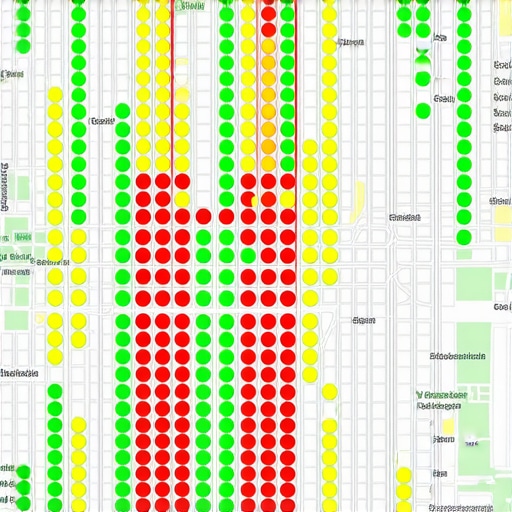 Looking ahead, we are moving toward a world of ‘visual and AI search.’ Google’s Search Generative Experience is starting to pull actual text from your reviews and image metadata to answer complex questions for users. This means you need to learn how to optimize your map listing for voice search and AI-driven queries right now. If you want to stay ahead of the pack, I suggest you start implementing these expert map optimization strategies for 2025 today. Here is my challenge for you: go into your profile right now and find one photo from over two years ago. Delete it and replace it with a high-resolution shot of your team in action. You’ll be surprised at how much that one ‘freshness’ signal can jumpstart your impressions.
The Hard Lessons I Learned While Chasing the Three-Pack
After years of working alongside google map experts, I realized the biggest mistake isn’t a technical error; it’s complacency. One lightbulb moment for me was discovering that the specific review word count that triggers ranking boosts is real—longer, descriptive reviews act as mini-articles that feed the algorithm. I also learned the hard way that you can’t wait for things to fix themselves; even if you are stuck at the start, knowing how to verify a business when the postcard never arrives keeps you in the game while others quit. Consistency in your visibility improvement efforts is what builds a moat around your business that no newcomer can easily cross.
The Only Toolkit You Need to Own the Local Neighborhood
If you are tired of guessing why your phone isn’t ringing, you need to rely on data rather than intuition. I personally trust tools that allow me to see the “invisible” layers of local search. First, make sure your maps optimization team is implementing the schema technicality most agencies skip for local dominance to connect your website’s soul to your map pin. Second, stop wondering which clicks turn into cash and learn how to track leads coming directly from your map listing. Without this, you are flying blind. Finally, don’t ignore the technical health of your profile; if you ever find yourself in a bind, look for how to fix your google business profile when support wont answer to keep your momentum alive.
#IMAGE_PLACEHOLDER_E#
Take Back Your Territory One Click at a Time
The journey to the top of the map results isn’t a sprint; it’s an ongoing claim on your local community. Every photo you upload, every review you reply to, and every attribute you update sends a signal that you are the most relevant choice for the customer. If you feel overwhelmed, remember that getting professional local visibility help isn’t an admission of defeat—it’s a strategic move to ensure your business remains the go-to authority in your zip code. You have the tools, the data, and the strategy to unlock local visibility expert map optimization strategies for 2025 starting today. Your future customers are already searching; it’s time to make sure you’re the one they find. Have you ever seen a competitor leapfrog over your listing overnight? Let me know your story in the comments below.