
I was white-knuckling the steering wheel during a localized monsoon last October, desperate for a decent espresso. I did what everyone does: I yelled at my dashboard. “Find me an open cafe with a drive-thru!” My phone chirped back with a list of shops that had been closed for three years or were forty miles in the wrong direction. That was my lightbulb moment. If I—someone who spends all day working with google map experts—couldn’t even get my own device to find a cup of coffee, how on earth were my clients supposed to be found by hungry, tired, or hurried customers? I realized then that my “perfectly optimized” profiles were actually failing the most important test: the conversation test. We are going to change that today. I’m going to show you how to stop being ignored by Alexa, Siri, and Google Assistant so you can actually show up when a real human asks a real question.
Stop Writing for Robots and Start Listening to Your Customers
For the longest time, I was obsessed with the technical side of things. I thought that if I just checked enough boxes, the algorithm would love me forever. I spent hours on visibility improvement strategies that looked great on a spreadsheet but sounded like a manual for a microwave. My biggest mistake? I forgot that voice search isn’t about keywords; it’s about answers. When someone uses their voice, they aren’t typing “pizza NYC.” They are asking, “Where is the best pepperoni slice near me?” If your profile doesn’t speak that language, you’re basically a ghost in the machine. We’re going to fix that today by learning how to optimize your map listing for voice search so you can capture those hands-free leads. Have you ever tried searching for your own business using only your voice while driving? It’s a wake-up call, isn’t it? Grab your phone and try it right now—did you actually show up, or did Siri give the lead to your neighbor?
Is voice search actually worth the hype for a local business?
I get the skepticism. You’re busy running a shop, not a tech lab. You might think local visibility help is just another buzzword to sell you services you don’t need. But here’s a startling fact: research by Backlinko found that Google tends to answer voice queries with very short, 29-word snippets that are written at a middle-school reading level. This means if you are over-complicating your “About” section, you are effectively locking the door on voice searchers. You don’t necessarily need a massive maps optimization team to win here; you just need to be the most helpful person in the results. A simple tweak to your business description can be the difference between a new customer and a missed opportunity. Let’s look at how we can turn those awkward, robotic sentences into conversational gold.
Speak Like a Neighbor Instead of a Brochure
I remember working with a local bakery owner, Maria, who was frustrated because her stunning sourdough loaves weren’t moving. Her profile said, “We provide artisanal leavened products using traditional fermentation.” Nobody talks like that. I sat her down and we did a visibility improvement exercise. We changed her description to answer the one question people actually ask their phones: “Where can I get fresh, warm bread before 8 AM in downtown?” Within two weeks, she had people walking in saying Siri sent them. This is the heart of local visibility help; you have to stop being a dictionary and start being a solution. If your business description sounds like a legal contract, you are invisible to voice assistants.
The Landmark Trick That Triggers Siri
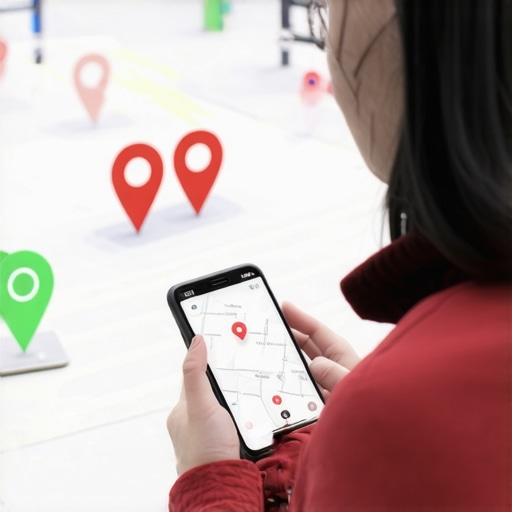
Voice search relies heavily on proximity and context. When people are driving, they don’t use street addresses; they use landmarks. I often tell my clients that google map experts reveal top secrets to boost your business presence often involve mentioning you are “just two blocks north of the historic clock tower” or “right across from the main library.” This creates a semantic web that helps Google’s AI understand exactly where you sit in the real world. This is a visibility improvement move for stagnant local businesses that costs nothing but ten minutes of your time. If you aren’t anchoring your location to things people actually recognize, you’re making the algorithm guess—and the algorithm hates guessing.
Why Your Google Business Profile Needs a FAQ Overhaul
The biggest weapon in your arsenal is the Q&A section of your Google Business Profile. Most people wait for customers to ask questions, but you can actually post your own. Think of it as a pre-emptive strike. If you how to use customer QA to improve your map ranking, you can feed the voice search engine exactly what it needs. Use natural, conversational questions like, “Do you have outdoor seating for dogs?” or “Is there free parking behind the building?” When you provide these short, 30-word answers, you are essentially hand-feeding the 29-word snippets that voice assistants love to recite. This is the one setting your maps optimization team needs to change fast to ensure you aren’t getting skipped over for a competitor who is more talkative.
The Technical Glue Holding Your Map Pin Together
While the words matter, the technical plumbing in the background ensures those words reach the right ears. This is where how to use local schema to fix your service boundary errors comes into play. Think of schema as a translator. It takes your human-readable text and turns it into data that Alexa can digest instantly. When I first started consulting, I ignored the code side because I’m a “words guy,” but I quickly learned that why proximity is the biggest hurdle for your local rankings often comes down to messy data. If your website and your map listing don’t match exactly, the voice assistant will flag you as unreliable and move to the next shop. You don’t need a massive maps optimization team to fix this—you just need a consistent address, phone number, and a clear service area.
The Review Count Myth That Keeps Small Shops Invisible
Everyone tells you that the person with the most five-star reviews wins. It sounds logical, right? But in my decade of experience, I’ve seen businesses with 500 reviews get buried by a competitor with only 50. The truth is that why your competitor with fewer reviews is ranking higher usually comes down to ‘Review Velocity’ and semantic relevance. If you got 100 reviews three years ago and nothing since, Google views you as a ghost town. Visibility experts know that a steady trickle of two reviews a week—specifically those where customers mention your services by name—is worth ten times more than a massive, one-time dump. When I explain this to a new maps optimization team, it’s like watching a lightbulb go off. Stop begging for generic ‘Great job!’ comments and start encouraging customers to mention exactly what they bought.
Don’t Fall for the Keyword Stuffing Trap
One of the most dangerous ‘Oops’ factors I see is the temptation to add keywords to your business name. It feels like a quick win to change ‘Joe’s Plumbing’ to ‘Joe’s Plumbing Best Emergency Drain Cleaning NYC.’ Don’t do it. This is the truth about local keyword stuffing: it might work for forty-eight hours, but it’s the fastest way to get your profile suspended or shadow-banned. Google’s algorithm is smarter than we give it credit for, and it cross-references your legal business name against state records and citations. If you’ve hired local visibility help that suggests this tactic, run the other way. You are essentially building your house on a sinkhole. Instead, focus on the interaction moves that actually matter for dominating map results, such as responding to every review and posting weekly updates. 
Why does your map pin vanish the moment you leave the neighborhood?
This is the advanced question that keeps business owners up at night. You search for yourself at the office and you’re #1, but you drive five miles away and you’ve disappeared. This happens because of the ‘Proximity Filter.’ A study by Whitespark confirms that proximity remains the single most influential ranking factor. However, google map experts can actually help you expand that radius. If you are struggling with why proximity is the biggest hurdle for your local rankings, the fix isn’t just ‘more SEO’—it’s building local authority through neighborhood-specific content. You need to prove to Google that your relevance extends beyond your front door. If you don’t address how to fix the invisible radius problem for your local store, you’ll always be a prisoner of your own zip code.
When Professional Help Actually Hurts Your Rankings
It sounds counterintuitive, but 5 signs your local visibility help is actually hurting your rankings often start with ‘automated’ solutions. If an agency promises to build 1,000 citations in a week using a bot, they are likely polluting your data with inconsistent addresses. This creates a mess that google map experts reveal top secrets to boost your business presence can take months to clean up. Real visibility improvement is a manual, thoughtful process of aligning your digital footprint with the physical reality of your shop. Have you ever fallen into this trap of choosing speed over quality? Let me know in the comments—I’d love to help you navigate the cleanup process.I’ve seen too many business owners treat their map listing like a set-it-and-forget-it slow cooker. That is the fastest way to get replaced by a hungrier competitor. The reality is that the local landscape is a living, breathing ecosystem where entropy is your biggest enemy. If you aren’t actively tending to your digital storefront, your pin starts to drift into the background. Real visibility improvement isn’t a one-time event; it’s a weekly ritual of hygiene and tiny adjustments. You have to realize that why your map listing needs regular updates to stay relevant isn’t just a suggestion—it’s a survival requirement in a world where Google’s AI is constantly re-evaluating who deserves the top spot.
Stop Trusting Single-Point Ranking Reports
When I first started out, I used to check my rankings from my office chair and think I was winning. I was wrong. A single ranking number is a lie because search results change literally block by block. I personally use grid-tracking tools like Local Falcon or BrightLocal’s heatmap because they show me exactly where my authority drops off. If I see a sea of green circles around my shop that turns into a wall of red just three miles away, I know exactly where I need to focus my visibility experts efforts. According to the Whitespark Local Search Ranking Factors survey, proximity is still king, but local relevance is what allows you to ‘stretch’ your reach into those red zones. This is why I tell every maps optimization team I train to stop looking at averages and start looking at maps. 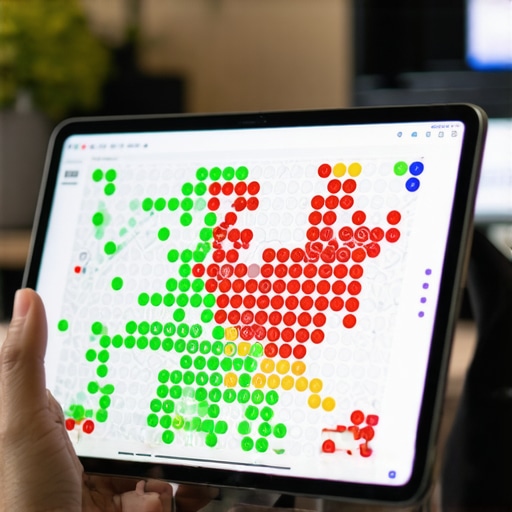
How do I keep my map rankings from falling off a cliff?
Maintenance is simpler than you think, but it requires discipline. Every Tuesday morning, I spend fifteen minutes doing three things. First, I check for ‘suggested edits’ from the public—competitors love to change your hours or website link when you aren’t looking. Second, I respond to any new reviews using the the review response trick that boosts your search authority by mentioning specific services. Finally, I check my NAP (Name, Address, Phone) consistency. If you’ve recently updated your website or moved, the citation audit moves that actually fix messy map data are your best friend to ensure Google doesn’t get confused. Confusion leads to lower rankings.
Prepare for the AI-First Future of Local Search
Looking ahead to 2025, the game is shifting from ‘keyword matching’ to ‘entity understanding.’ Google’s Search Generative Experience (SGE) is going to start summarizing your business for users before they even click your profile. To stay ahead, you need to unlock local visibility expert map optimization strategies for 2025 that focus on high-quality, unique images and detailed service menus. The machines are getting better at ‘reading’ your photos, so if your profile is still full of stock photography, you’re already behind. This is the secret to staying on the map when the algorithm shifts: provide more ‘real-world’ data than anyone else. I want you to try this tonight: grab your phone, go to your business profile, and upload three ‘behind the scenes’ photos of your team working. It sounds small, but those fresh signals are exactly what the algorithm craves to keep your pin pinned at the top.
3 Brutal Truths About Local Visibility Help That Finally Clicked for Me
After years in the trenches, I realized that google map experts aren’t wizards; they are just more disciplined than the competition. The first lesson? Volume is a vanity metric. I’d rather have five reviews that mention my specific service than fifty that just say ‘good job.’ Second, your map pin is fragile. One bad data sync can undo months of visibility improvement, which is why I now check my citations like a hawk. Finally, I learned that you can’t out-tech a bad customer experience. If your ‘Near Me’ signals are strong but your response time is slow, the algorithm will eventually find someone more reliable.
The Minimalist Toolkit I Use to Dominate the Local Map
I don’t believe in overcomplicating things. To stay ahead, you need a few reliable pillars. I always recommend starting with a professional map optimization team if you’re scaling, but if you’re a solo shop, stick to the basics: a solid grid-tracking tool to see your actual reach and a dedicated folder for the exact photo types that trigger your profile ranking signals. I personally trust the Whitespark Local Search Ranking Factors report as my ‘North Star’—it’s the only source that cuts through the noise. Also, don’t sleep on the simple tactic to double leads without paying for google ads by focusing on your ‘Directions’ requests and click-to-call buttons.
Your Business Deserves to Be Seen by Real People
It’s easy to get lost in the spreadsheets and technical jargon, but at the end of the day, local visibility help is about making sure that the person looking for what you offer actually finds you. The digital world is moving fast, and as we look toward expert map optimization strategies for 2025, the winners will be those who prioritize authenticity and conversational answers over robotic keywords. You have the tools, the strategy, and the mindset—now it’s just about taking that first step. Have you ever noticed your map ranking change significantly just by moving one block away? Let me know in the comments below, and let’s figure out why together.