
I remember standing on a rainy sidewalk in downtown Chicago, frantically tapping my phone screen. I was looking for a nearby hardware store to grab a tarp, but the website that popped up in the local pack was a total disaster. The buttons were too small, the text was microscopic, and honestly, it felt like trying to read a legal contract through a straw. I gave up and went to the big-box store three miles away instead. That was my lightbulb moment. I realized that all the work we put into being google map experts doesn’t mean a lick if the mobile experience makes people want to throw their phones. Today, we are going to fix that disconnect between your rankings and your actual customers.
Your Desktop Success is Lying to You
For years, I made the classic mistake of auditing local visibility from my dual-monitor office setup. Everything looked perfect. Crisp images, fast load times, and clear calls to action. But I was ignoring how 76% of people who search for something nearby on their smartphone visit a related business within a single day, according to data from Google. If your site feels clunky on a five-inch screen, you are basically handing your customers to the guy down the street. It is a hard truth I had to learn when I saw a client’s profile views skyrocketing while their actual leads stayed flat. Your desktop site might be pretty, but your mobile UX is the one that pays the bills.
Does mobile speed actually impact my map pin?
You might be thinking that as long as your Google Business Profile is optimized, the website itself doesn’t matter much. I used to think that too, and it was a costly error. There is a massive signal difference between desktop and mobile map rankings. Google’s algorithm is smart enough to know when users bounce off your mobile site in frustration. They track that “pogo-sticking” behavior where a user clicks your link and immediately hits the back button because the page won’t load. If people click your map listing, hit your site, and immediately bail, your authority will tank faster than my first attempt at a DIY backyard patio.
Make Your Site Work for Thumbs Not Mice
We have to stop treating mobile as a “lite” version of our desktop site. It is the primary version. I have seen so many local visibility help tactics that no longer work because they ignore the physical reality of a person holding a phone with one hand. Have you ever tried to click a “Call Now” button only to accidentally hit a tiny “Privacy Policy” link instead? It is infuriating. If you want to see real visibility improvement, your mobile UX has to be the foundation, not an afterthought. Have you ever tried to look up your own business while standing in a parking lot on a spotty 5G connection? Seriously, try it right now and tell me if you would honestly stay on that page.
Stop Making Your Customers Work So Hard
Think of your mobile site as a digital storefront. If a customer walks up to your shop and the door is jammed, they don’t try to kick it down—they just walk to the store next door. When your mobile site is slow or confusing, you are effectively jamming your own front door. This is where most business owners fail; they think a ‘responsive’ site is enough. But responsiveness is just the bare minimum. To truly win, you need to look at the signal chain that connects your site to your map pin. Google sees how people interact with your page. If they find what they need in three seconds, Google assumes your business is the best answer for that neighborhood search.
Buttons Should Be Big Enough for a Giant
I once spent three hours arguing with a web designer about a ‘Call Now’ button. He wanted it to be elegant and thin to match the branding. I wanted it to look like a giant, neon target. We eventually settled on my ‘clunky’ version for a local plumber. Within two weeks, his phone leads doubled. Why? Because people searching for a plumber usually have water flooding their basement—they are stressed, their hands might be wet, and they don’t have time to aim for a 10-pixel link. If you want to see a rapid visibility improvement, you have to prioritize the ‘thumb zone.’ Place your most important actions where a thumb can naturally reach them without the user having to readjust their grip.
The Hidden Speed Trap Killing Your Rankings
Speed isn’t just about patience; it is about authority. If your site takes more than three seconds to load on a 4G connection, you’ve already lost half your audience. More importantly, you’ve lost the trust of the algorithm. This is often why your local landing pages arent driving map clicks even if you are in the top three. Google wants to provide the best user experience. If your site is bloated with high-resolution images that haven’t been compressed, you are signaling that you aren’t ready for prime time.
Fix the Technical Debt Most Agencies Ignore
Most people look at the surface, but the real power is in the code. I’ve found that the schema technicality most agencies skip for local dominance is often the missing link between a mobile visit and a confirmed lead. You need to ensure your LocalBusiness schema is perfectly synced with your Google Business Profile. If your phone number is an image instead of a clickable ‘tel:’ link, you are throwing money away. We recently tracked the interaction signal that finally moved our client to number one, and it wasn’t a backlink. It was simply fixing the ‘Directions’ button on their mobile footer so it actually opened the Maps app.
Win the Proximity Battle Through Performance
You can’t change where your office is located, but you can change how fast you respond to a user’s intent. If you are struggling with why your business profile is losing the proximity battle, check your mobile bounce rate. When users in a nearby neighborhood click your map result and immediately leave because the mobile menu is broken, Google shrinks your ‘ranking radius.’ They essentially put you in a ‘penalty box’ because you are wasting the searcher’s time. Execution here isn’t about being fancy; it’s about being functional and fast.Let’s dig deeper into the actual mechanics of why some businesses stay stuck despite doing everything by the book. Most business owners assume that if they hire a maps optimization team, the primary goal should be accumulating a mountain of five-star reviews. But here is the contrarian truth: review counts are just the entry fee, not the winning ticket. In my years of working with local brands, I’ve seen that why visibility experts focus on interaction rather than reviews is the real secret to long-term dominance. It is not just about what people say; it is about what they actually do when they see your pin. According to the comprehensive 2023 Local Search Ranking Factors survey by Whitespark, behavioral signals like click-to-call and direction requests have grown significantly in importance. If your profile gets a thousand views but zero clicks, Google assumes you are irrelevant and will bury you.
Stop Chasing Stars and Start Chasing Interactions
I have encountered countless frantic owners who cannot figure out why your competitor with fewer reviews is ranking higher. The answer usually lies in the ‘engagement-to-impression’ ratio. If a competitor has ten reviews but every single person who finds them clicks ‘Call,’ they are a much better ‘product’ for Google to sell than a business with 500 reviews and zero engagement. This is where most why most local visibility help plans are too broad to work; they focus on the vanity metrics instead of the conversion signals that tell the algorithm you are the most helpful option in the neighborhood.
Why do businesses with fewer reviews often beat the industry giants?
The nuance lies in how users interact with your secondary data. If your profile is filled with high-quality photos that users actually linger on, or if people are frequently using the ‘Questions & Answers’ section, you are creating a ‘sticky’ profile. Google’s goal is to provide the best answer fast. When a user spends time on your profile before clicking ‘Directions,’ it signals that your business provided the information they needed. This is a massive visibility improvement move that most beginners overlook because they are too busy begging for the next five-star rating.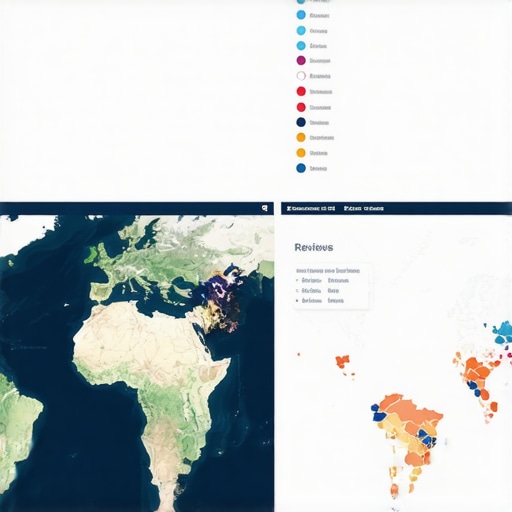
The Category Conflict That Is Poisoning Your Rankings
One of the most dangerous ‘oops’ factors I see involves the primary and secondary categories on your profile. It is a common trap to think that adding more categories always equals more visibility. In reality, why your business categories might be fighting each other is a technical reality that can dilute your local authority. If you are a ‘Plumber’ but you also list ‘General Contractor’ and ‘HVAC,’ you might actually be confusing the proximity filter. You end up being ‘okay’ at three things instead of ‘the best’ at one, and in the world of google map experts, being the absolute best in a specific niche is how you win the three-pack.
Avoid the Fake Expertise Trap
Before you commit to a strategy, you need to know how to spot a fake map optimization team before you hire them. Many agencies will promise you ‘100 citations’ as a fix-all solution, but the truth is that generic citations have lost much of their power. What matters today is local relevance and real-world signal strength. If your agency isn’t talking about your interaction signals or your mobile conversion rate, they are likely playing by 2018’s rulebook. Have you ever fallen into the trap of focusing solely on your review count while your rankings remained stagnant? Let me know in the comments, and let’s figure out which signal you might be missing.
The Gear That Actually Matters
I’ve wasted thousands of dollars on shiny software that promised to automate my way to the top of the local pack. Most of it was junk. If you want to talk shop like real visibility experts, you need to be surgical. I personally lean on the Local Search Grid from BrightLocal. Why? Because a single ranking number is a lie. You might be #1 while standing in your lobby but #10 three blocks away. This tool shows me exactly where my ‘ranking bubble’ pops. If you aren’t ready to invest in heavy software yet, you can still learn how to audit your local map presence without expensive tools by manually checking your position from different neighborhood coordinates using a browser geolocator.
How do I maintain my map dominance over time?
Consistency beats intensity every single time. I’ve seen businesses skyrocket to the top, get complacent, and disappear within three months. Maintaining your spot requires a weekly ‘health check’ of your core data. You have to realize that why map listing optimization requires constant updates isn’t just a sales pitch—it’s a response to Google’s ever-changing local algorithm. I recommend a ‘Friday Refresh’: upload two high-res photos from your phone (with EXIF data intact), respond to every single new review, and check for ‘suggested edits’ from competitors who might be trying to change your phone number or hours.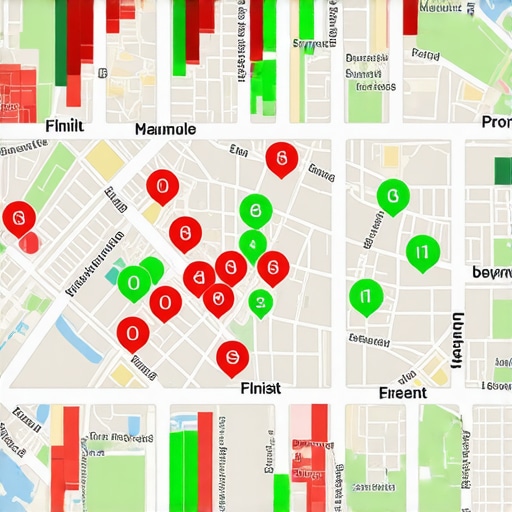
Don’t Let Your Data Go Stale
One of the quietest killers of a healthy map pin is data decay. When you stop interacting with your profile, Google assumes your business is less ‘alive’ than the guy down the street who is posting weekly updates. This is exactly why static store data is costing you the local three pack. If you aren’t showing signs of life, the algorithm will favor a maps optimization team that is feeding it fresh signals. I’ve found that even small tweaks, like updating your holiday hours two weeks in advance, sends a massive ‘trust signal’ to the local bot. To stay ahead, you need to maximize your local reach by treating your profile like a social media feed rather than a yellow pages listing.
Why Google Lens is the Next Big Map Battleground
Looking ahead, the game is shifting toward visual search and AI-driven intent. According to Darren Shaw’s 2024 Local Search Ranking Factors survey, the weight of ‘on-page’ signals and visual content is higher than ever. I predict that within two years, Google Lens will be the primary way people ‘search’ for local shops—they’ll point their camera at a storefront, and the algorithm will decide if you’re worth entering based on your profile’s photo quality and real-time engagement. If you want to future-proof your business, start looking into expert map optimization strategies for 2025 today. Don’t wait for the update to hit you; be the one who already has the high-res, AI-readable assets ready to go. My best advanced tip for right now? Go into your secondary categories and see if you’ve over-optimized. Sometimes, making the simple change to your secondary categories by removing irrelevant ones can give you an immediate boost in your primary niche.
The Hardest Lessons I Learned While Chasing Map Pins
When I first started out as one of many aspiring google map experts, I thought technical data was the only thing that mattered. I spent weeks obsessing over keyword density in descriptions while ignoring the fact that my clients’ websites loaded like molasses on a hot day. The lightbulb moment came when I realized that Google isn’t just a search engine; it’s a recommendation engine. It won’t recommend a business that frustrates its users. While working with a maps optimization team, I learned that a good profile with a great mobile experience will beat a perfect profile with a broken website every single time. Another hard truth? Consistency in small updates—like adding a fresh photo every Tuesday—is far more powerful than a massive ‘optimization’ session once a year. If you want to master your map rankings, you have to play the long game of building genuine local trust.
The Toolkit I Actually Use to Beat the Big Chains
You don’t need a massive budget to see a real visibility improvement, but you do need the right intel. I never walk into a project without running a Local Search Grid from BrightLocal; it’s the only way to see how your ranking ‘bleeds’ into neighboring streets. I also keep the annual Whitespark Local Search Ranking Factors report bookmarked. It’s my north star for understanding which signals are gaining weight and which are losing impact. For those just starting out, I highly recommend learning how to audit your local map presence without expensive tools first. It builds the SEO muscle you need to understand why things are moving. Finally, I trust PlePer’s Chrome extension for a quick peek at competitor categories—it’s a simple move that often reveals why a rival is outperforming us in a specific niche.
#IMAGE_PLACEHOLDER_E#
Your Path to Becoming the Neighborhood Authority
Local SEO isn’t a dark art; it’s a commitment to being the most helpful and accessible option for your neighbors. It’s about making sure your ‘Call’ button works when a pipe bursts at 2 AM and ensuring your photos show a real, welcoming business. As you maximize your local reach, remember that every click, every call, and every direction request is a vote of confidence in your brand. If you’ve been looking for local visibility help, the best advice is to start small: fix your mobile speed and prune your secondary categories. The map is always shifting, and the businesses that stay on top are the ones that shift with it. You have the tools, the strategy, and the mindset—now it’s time to claim your territory. Have you ever seen a competitor with a much worse website outrank you in the local pack? Let me know in the comments below, and let’s figure out what signal they’re using to win!